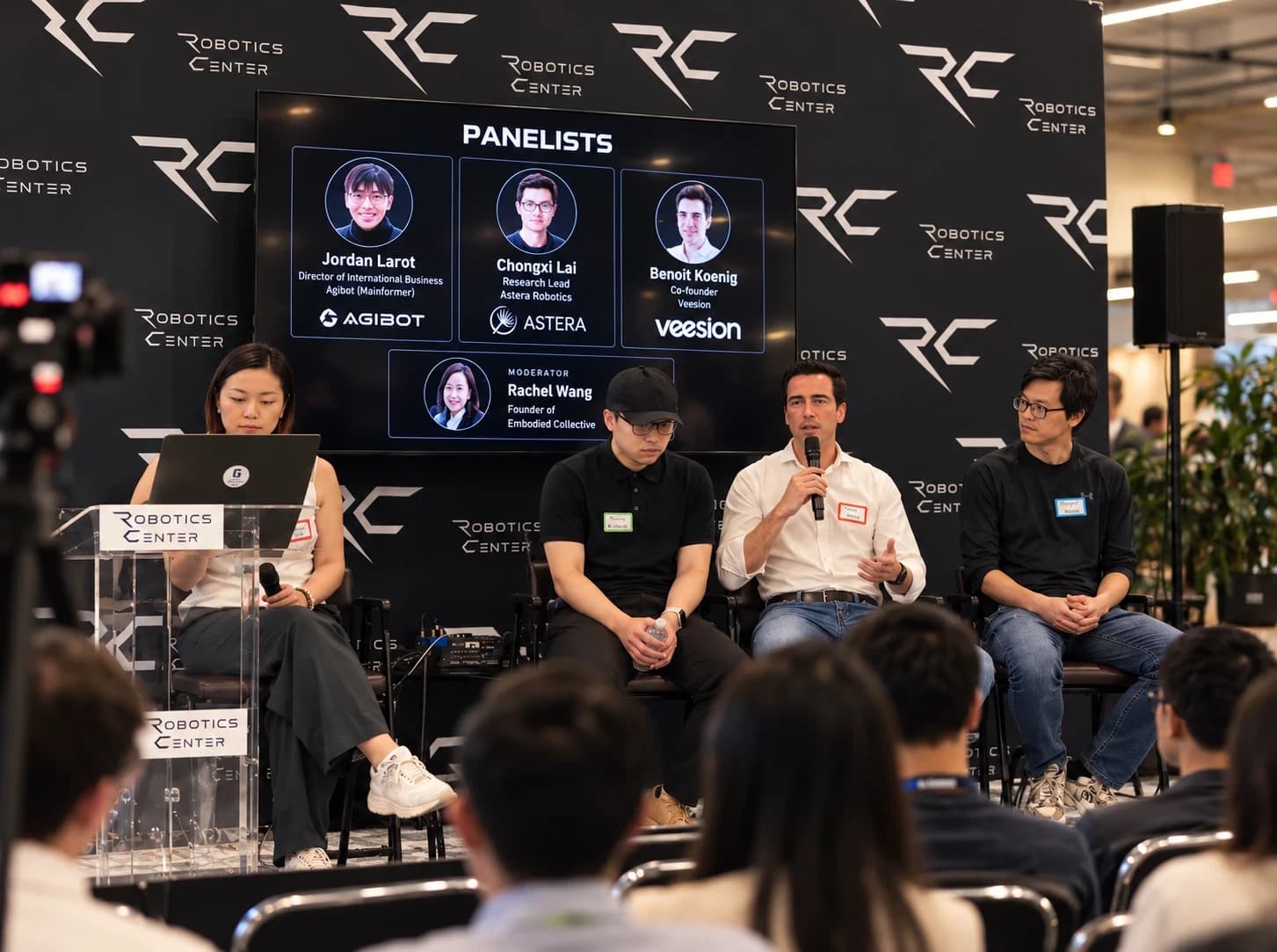
Our first flagship, Physical AI Deployment in Business, took place on September 23 in SoMa. The panel covered industrial sensing (Bosch Sensortec), deployed vision AI (Veesion), robotics benchmarks (WBCD) and the hardware supply chain (Robotics Center of Silicon Valley). The night ended with a live humanoid demo from High Torque Robotics.
We built the conversation around four practical topics.
1. Where is the customer pull?
Which use cases have an operational problem urgent enough to pay for now, and which are still experimental. The goal was to separate real demand from interesting technology.
2. What can be monetized before a full robot?
Commercial value is showing up across the stack: sensing, perception, data, evaluation, integration, services and supply chain. Several of these layers can support a business before an end-to-end autonomous robot is ready.
3. Own the stack or build the platform?
Which parts of the stack should a Physical AI company own, and where should it rely on partners? The discussion looked at when to specialize, what to open up through APIs and SDKs, and who should own integration, maintenance and support once a robot is in a customer's building.
4. From first deployment to repeatable business
What evidence shows that a pilot is a market and not a one-off project. How much customization is reasonable for the first customers. What changes operationally to support the next ten deployments.
What we took from it
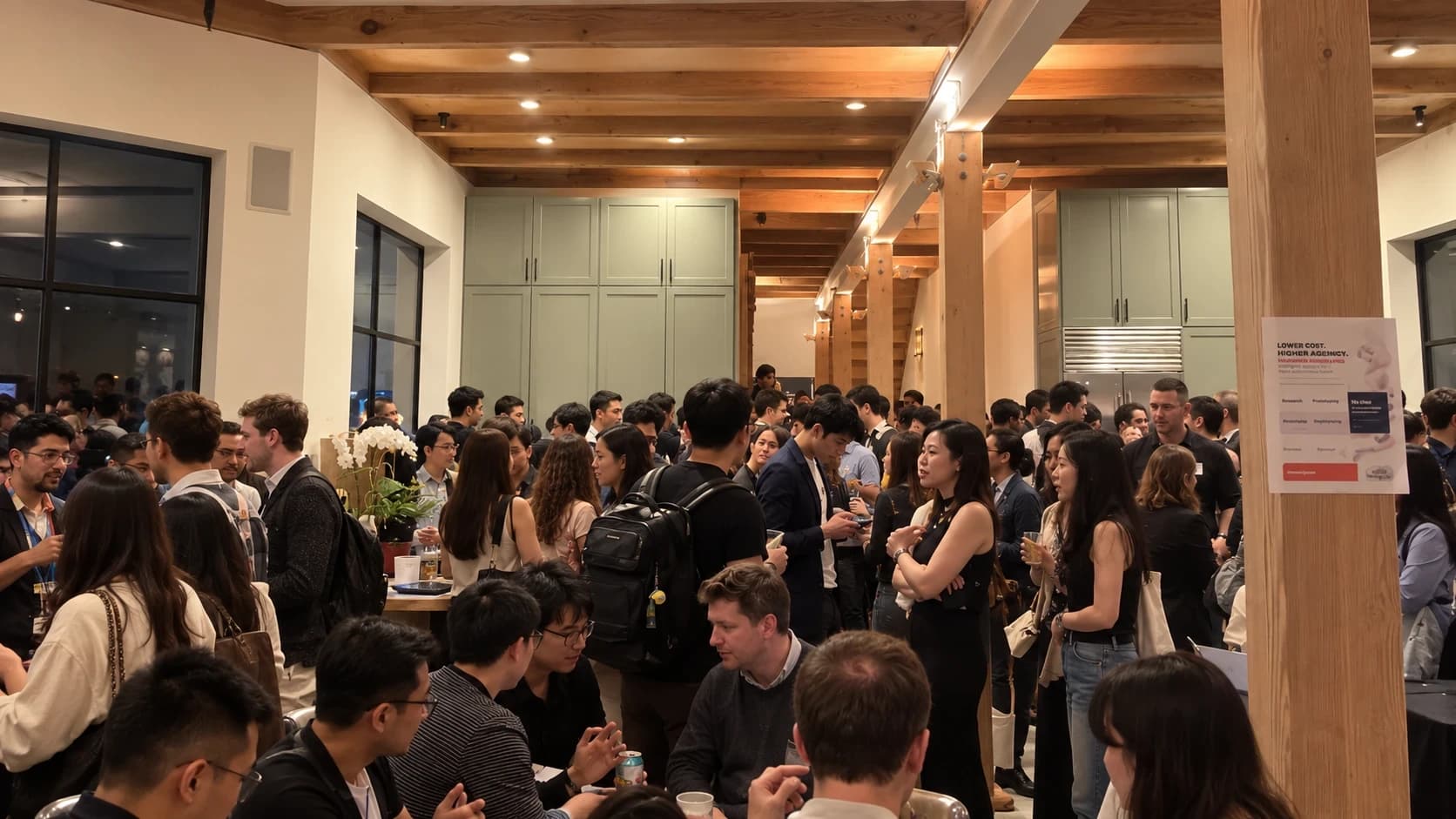
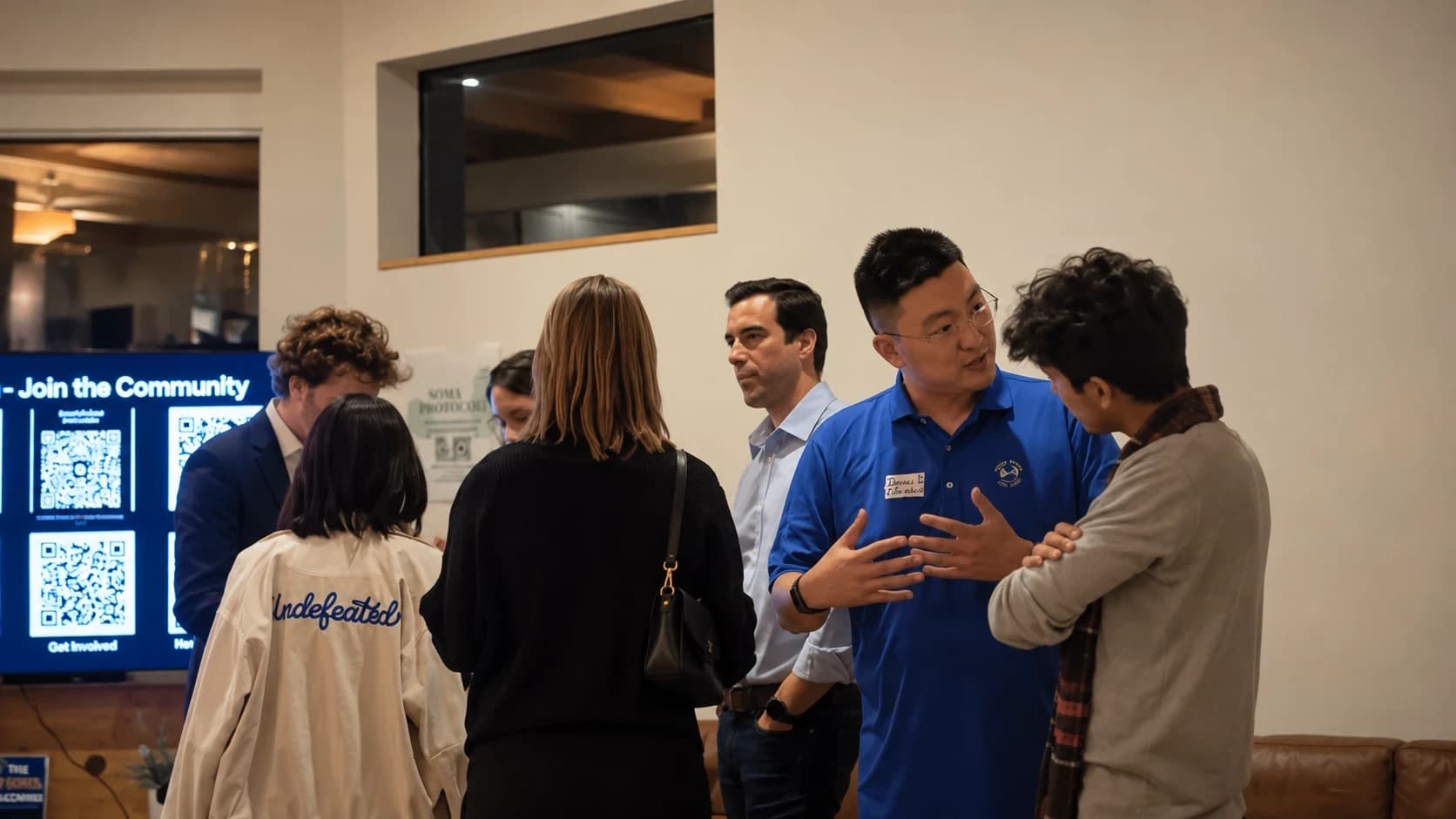
The room was full of people who already work on these problems every week. The most useful outcome was not a single answer, but the conversations that started afterward between builders, buyers and suppliers. That is the job of this community.