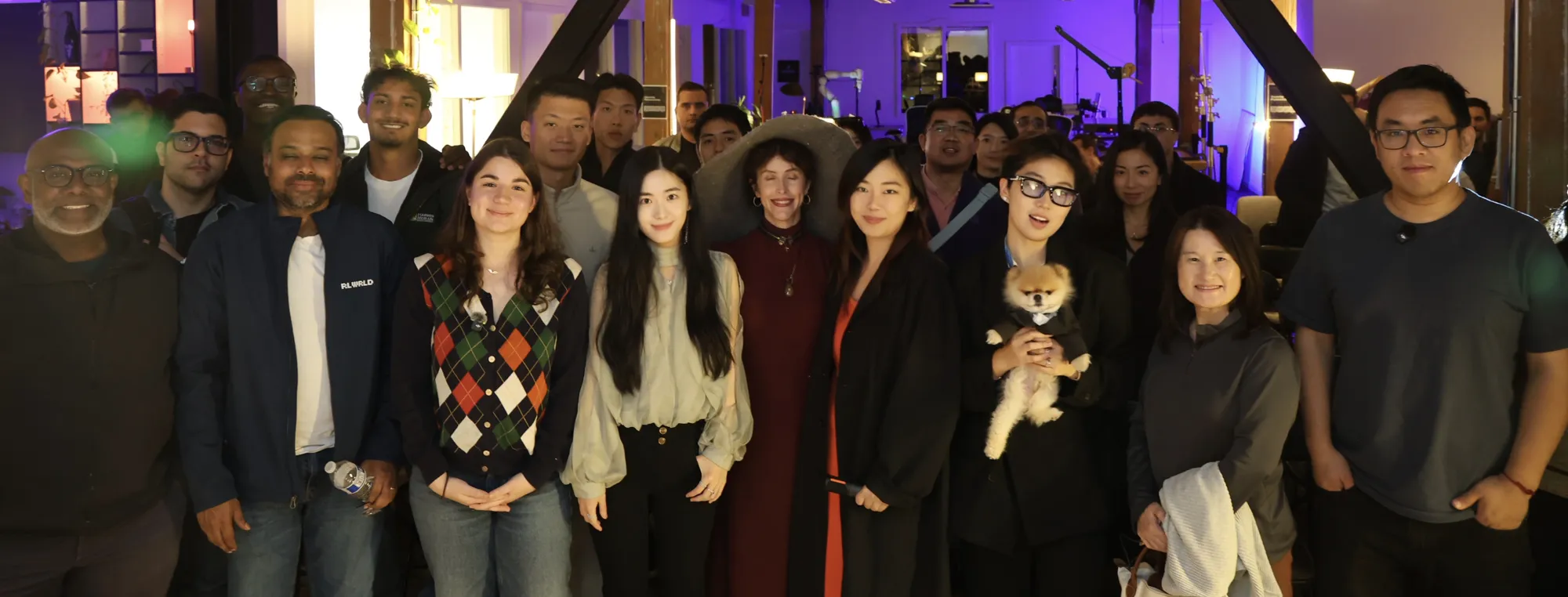
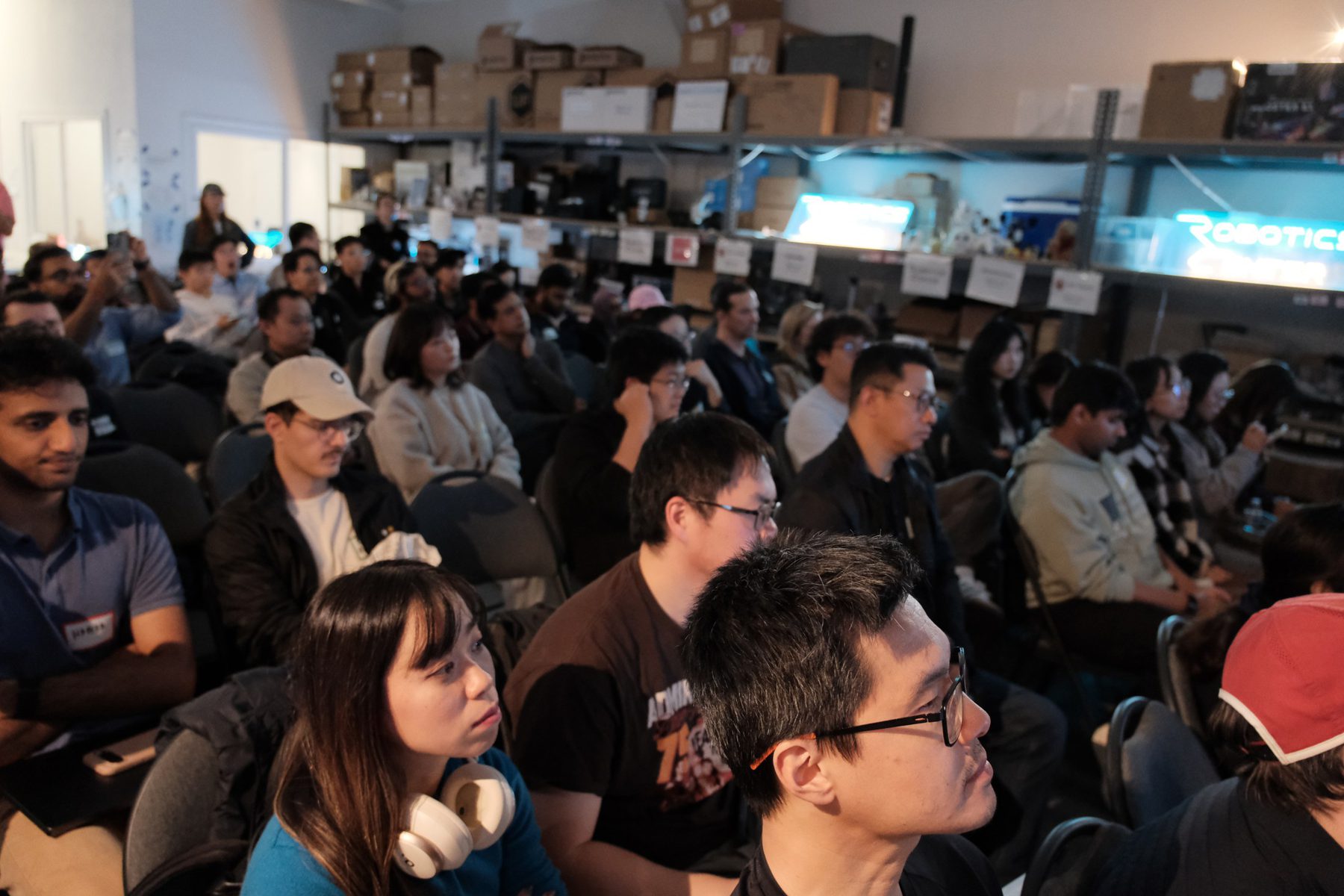
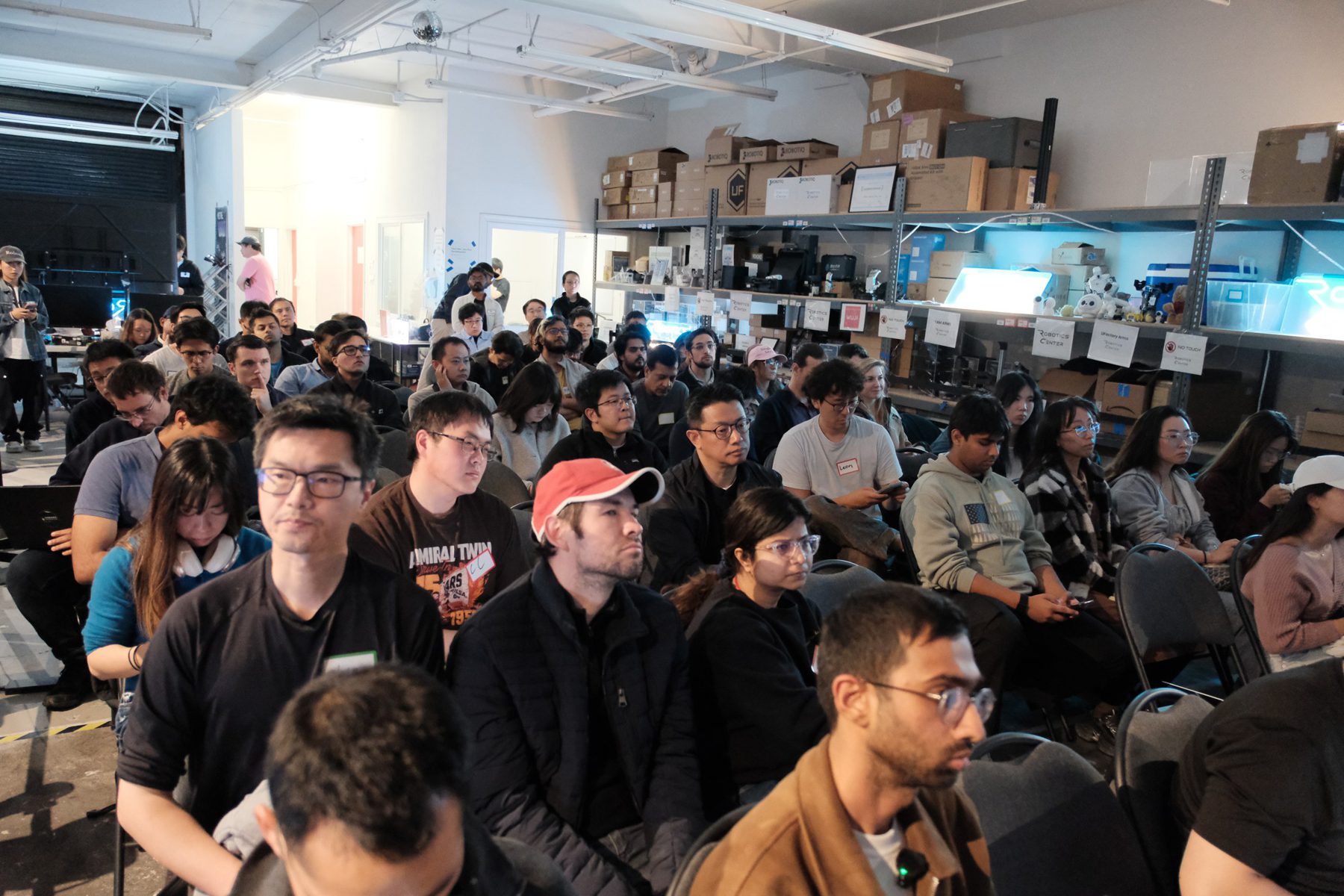
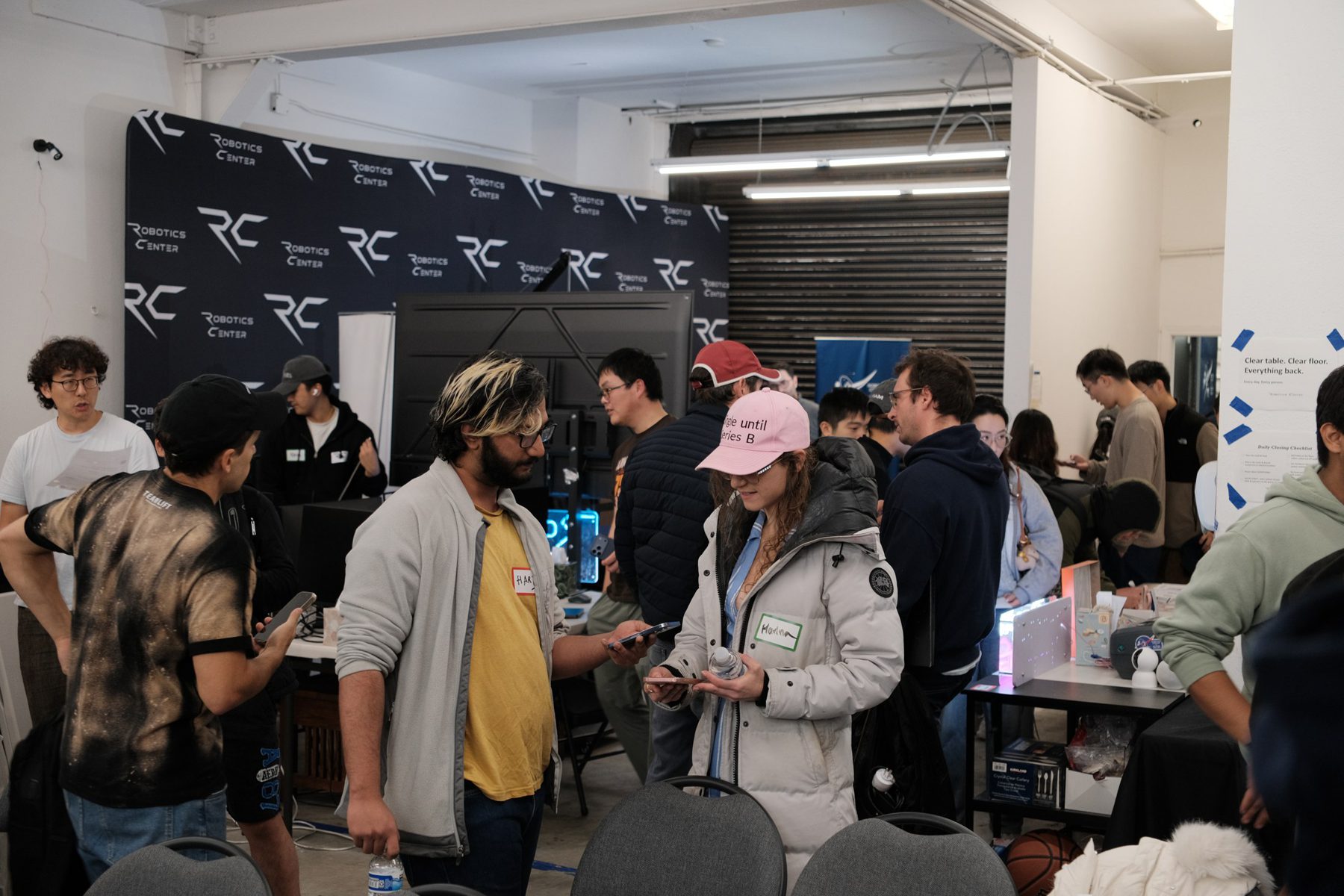
CoRL 2026 wrapped in Austin on Thursday. On Friday night it poured in San Francisco, flights were grounded, and the room still filled up. More than 250 people registered. Of the 211 guests we approved, 45% were founders, C-level or senior leaders, 25% were researchers and engineers, and 15% were investors. 57% came from Physical AI and AI companies, from robots and hardware to foundation models.
Not everyone made it to Austin, so we brought the authors to a working robot lab in SF. I opened with six moments from CoRL week:
- NVIDIA's GR00T 2, an open world action model for humanoids
- Lisa Su and Fei-Fei Li together on the CoRL main stage
- Google DeepMind's Gemini Robotics 2.5, built with help from Gemini
- Amazon FAR's single policy that grasps 66 objects with zero teleop data
- Stanford's BEHAVIOR: household robots from 12% to 48% in a year
- Best Paper: UC Berkeley's SuperMimic, a humanoid motion tracker trained on one GPU in three hours
Then the authors took over. Two of them were stuck behind the same grounded flights, so they recorded their talks at the airport and we played both.
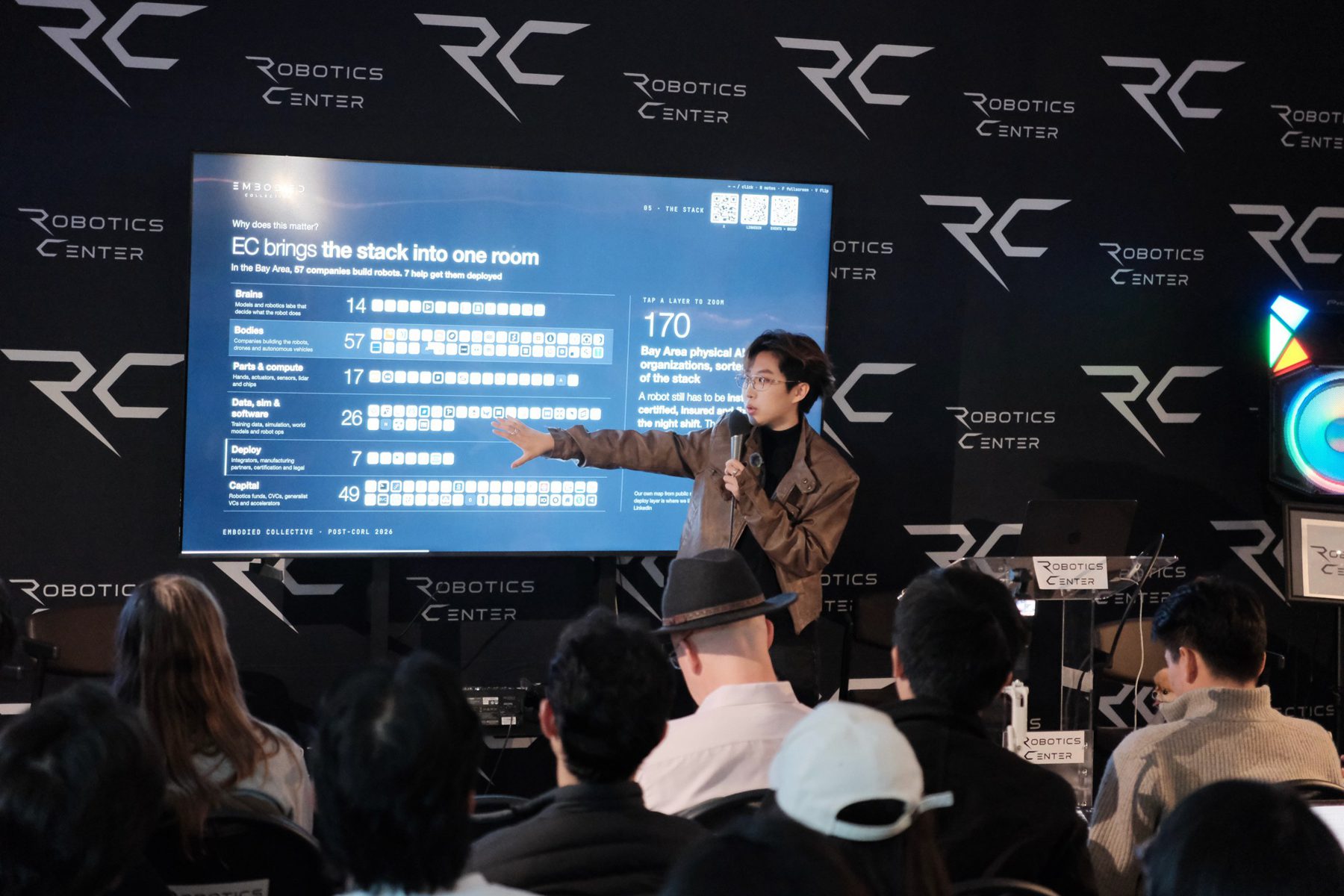
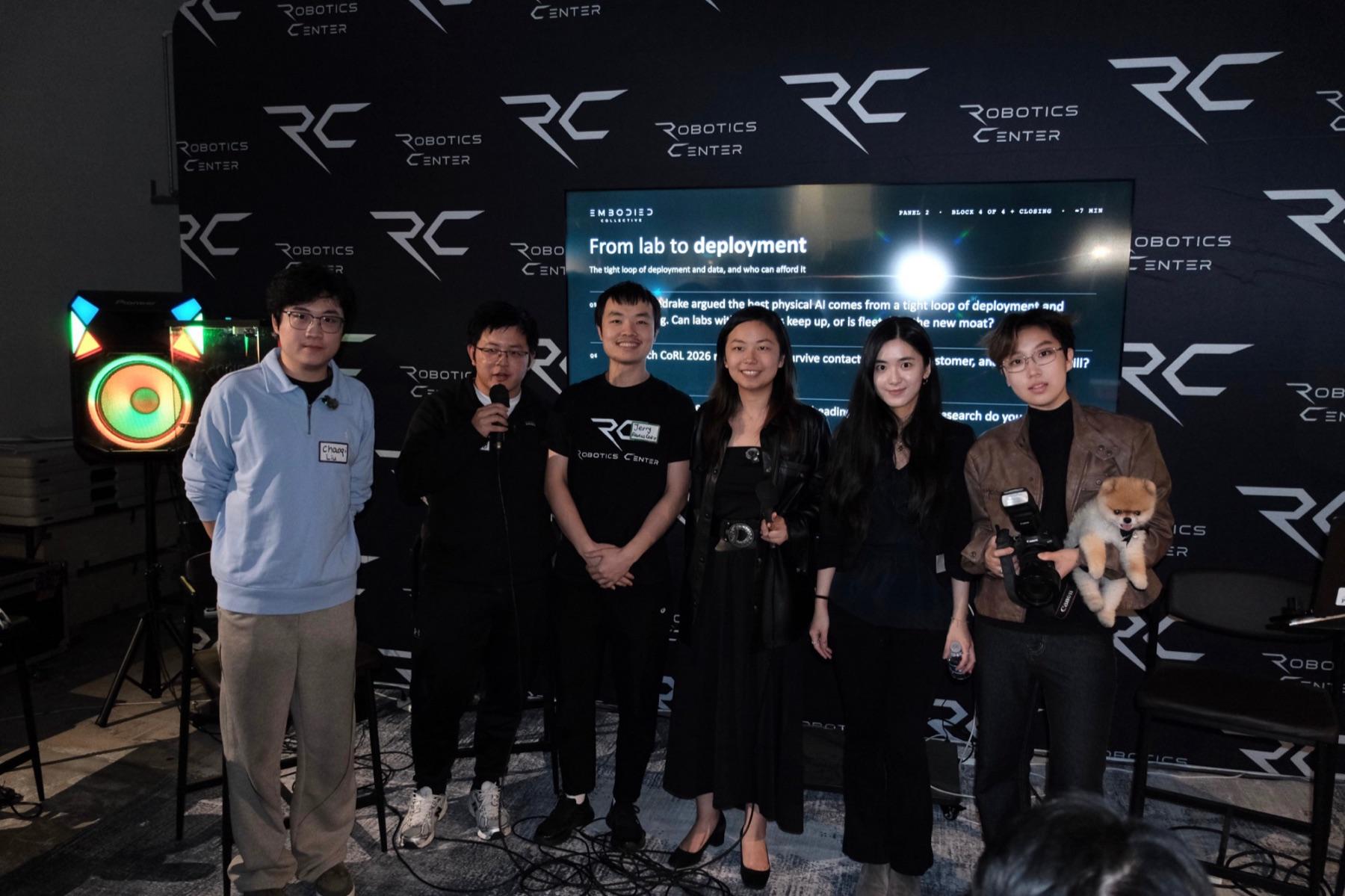
Five CoRL authors went first, in an order we chose on purpose: how a robot is taught, what it remembers, what it unlearns, how it finds its way through a city, and how one body learns to move. Sharon Zhang moderated. Then Rachel Wang sat down with two researchers from the labs behind the week's headlines, Amazon FAR and 1X.
We went back through the recording. Here is what we keep coming back to.
Ten takeaways
1. Force is the data most robots never see
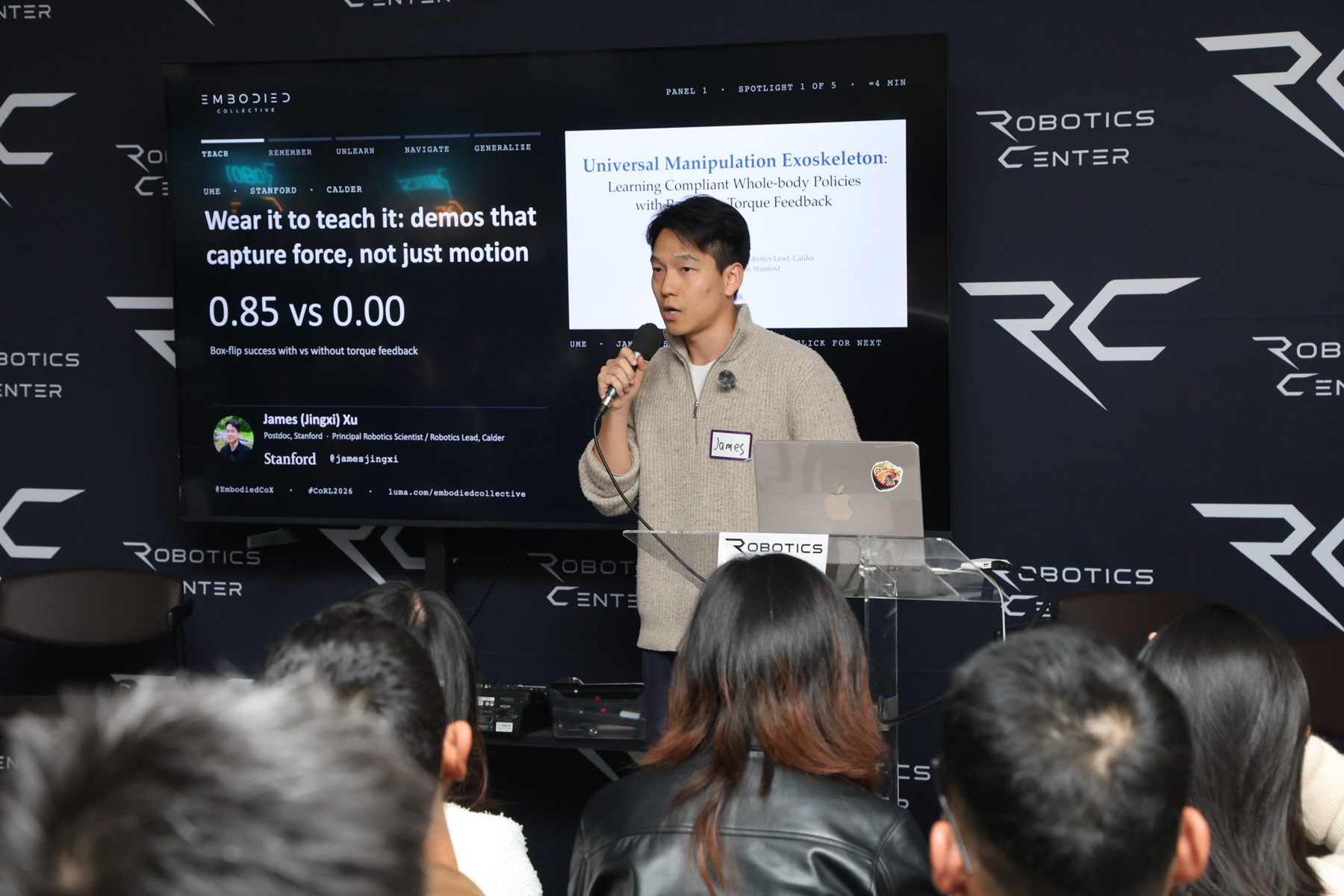
James (Jingxi) Xu · Stanford BDML postdoc and Principal Robotics Scientist at Calder · co-author of UME, a CoRL 2026 paper
James showed his team's exoskeleton for teleoperation. Gravity compensation means the operator feels only the forces the robot meets, so the data records torque, not just where the hand went. A fridge-opening policy trained on 150 trajectories found the handle again after someone pushed the door shut, and it beat the same task without torque. Another policy slid a GPU card out of a gap under 5 millimeters wide, where a device that only records hand pose gets stuck. On the panel, his bet for the coming year: "I expect to see a ramp in actual physical data that you cannot get from just purely video."
2. Robot memory should be small, tied to place, and updated by doing
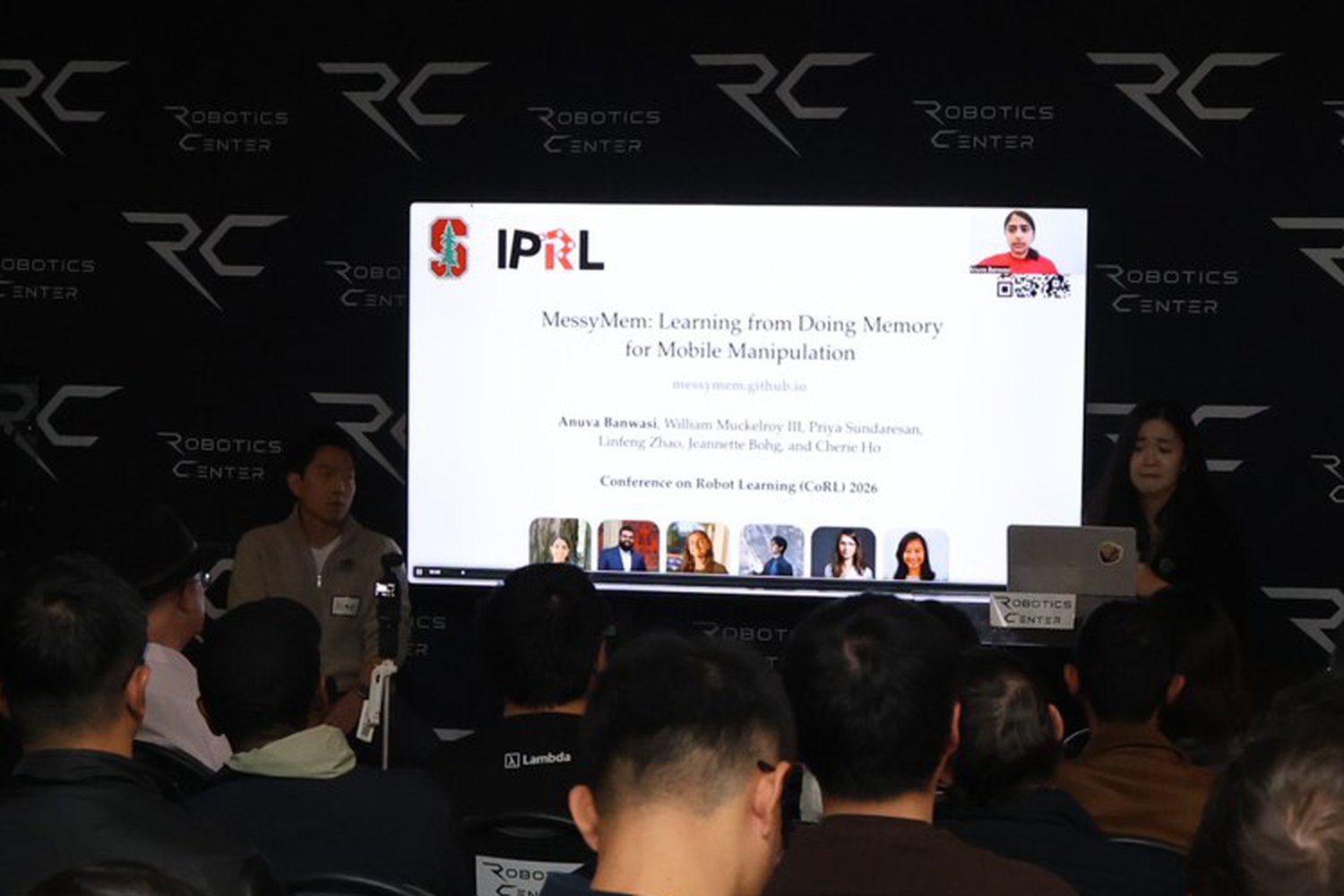
Anuva Banwasi · Stanford IPRL · first author of MessyMem, a CoRL 2026 paper · recorded
In MessyMem, a robot that finds one door locked remembers it and goes straight to the other two next time. Anuva's point for anyone building long-running robots: memory has to stay compact and anchored in space as environments get bigger, and the robot should keep updating it from what it learns by interacting.
3. You can train a bad habit out of a policy you already have
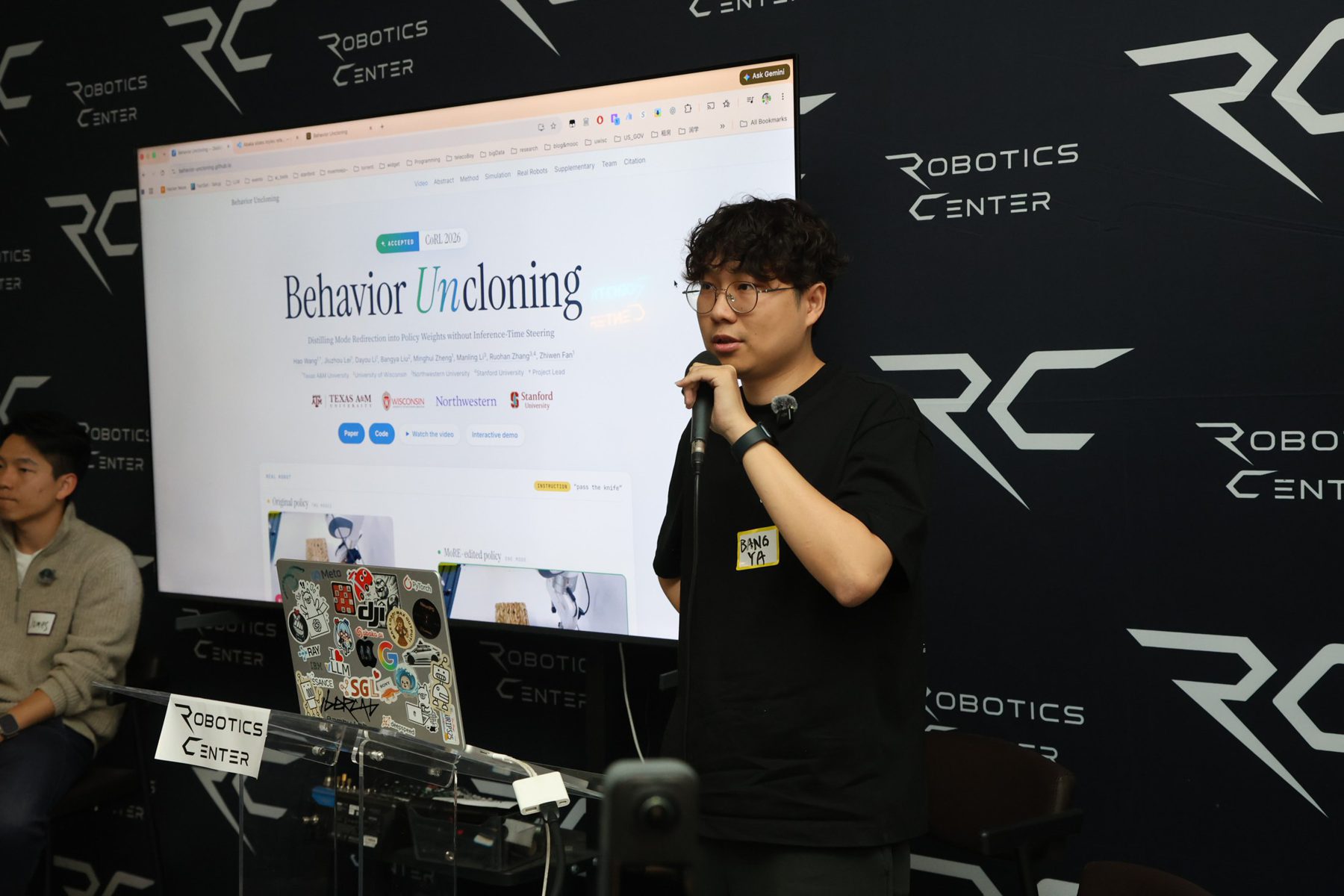
Bangya Liu · UW–Madison and Abaka.ai · co-author of Behavior Uncloning, a CoRL 2026 paper
Imitation learning copies everything in the demos, good and bad. Bangya's example was a robot handing over a knife blade-first. Behavior Uncloning trains a small reward model from a small amount of labeled data, then fine-tunes the existing policy to stop the unwanted behavior. It shifts the behavior in about 500 training steps.
4. Language can sit between the map and the motion
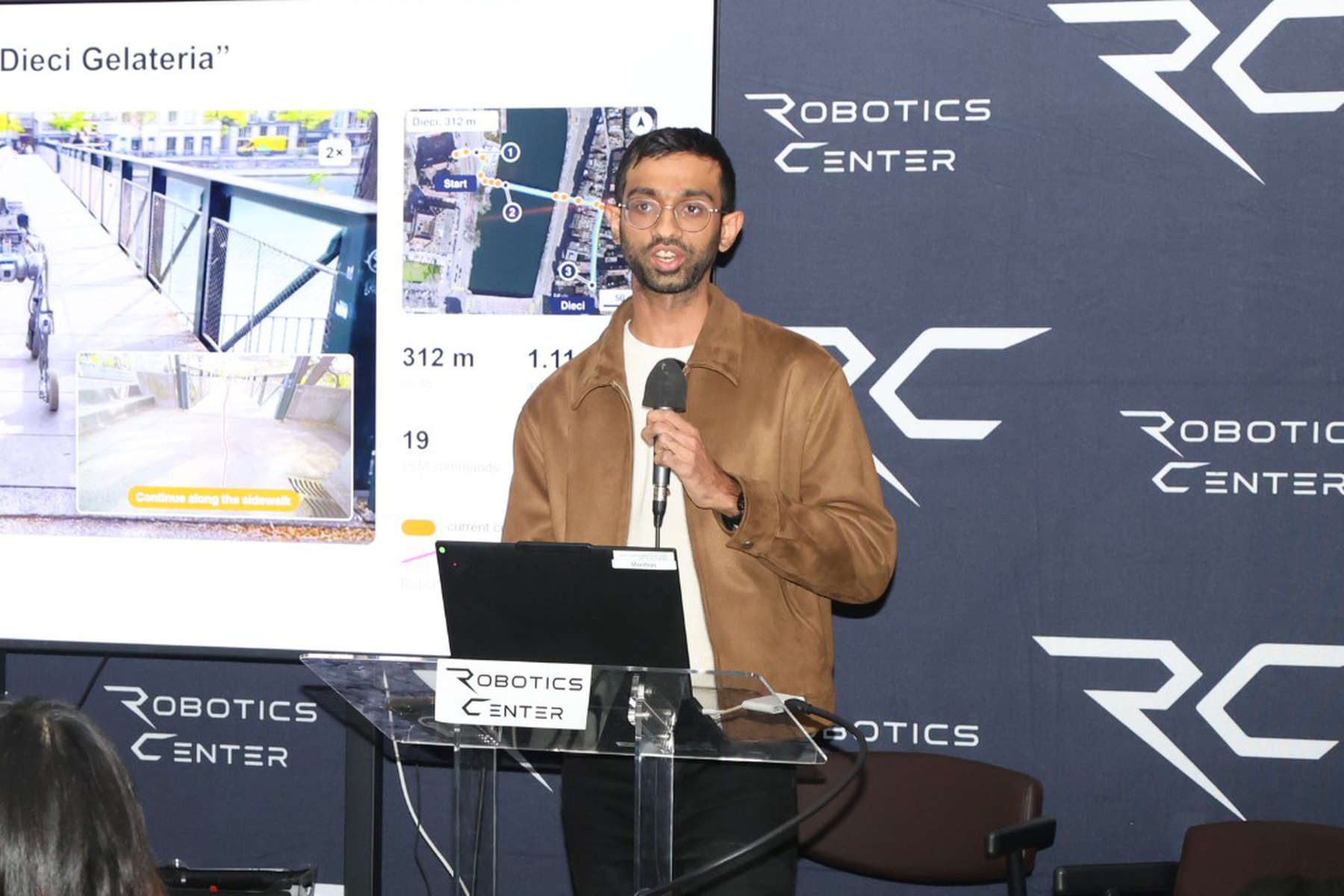
Manthan Patel · ETH Zürich Robotic Systems Lab · WayTrace, a spotlight at the CoRL SISREN workshop
In WayTrace, Manthan's robot turns map directions into short language instructions, then into a path. In central Zurich, with GPS error above 10 meters, it still crossed at the crosswalk, and it made ten times fewer crosswalk and sidewalk violations than the methods it was compared against. The instruction-following part was trained without any robot data. Only the low-level policy changes when you move to a new robot.
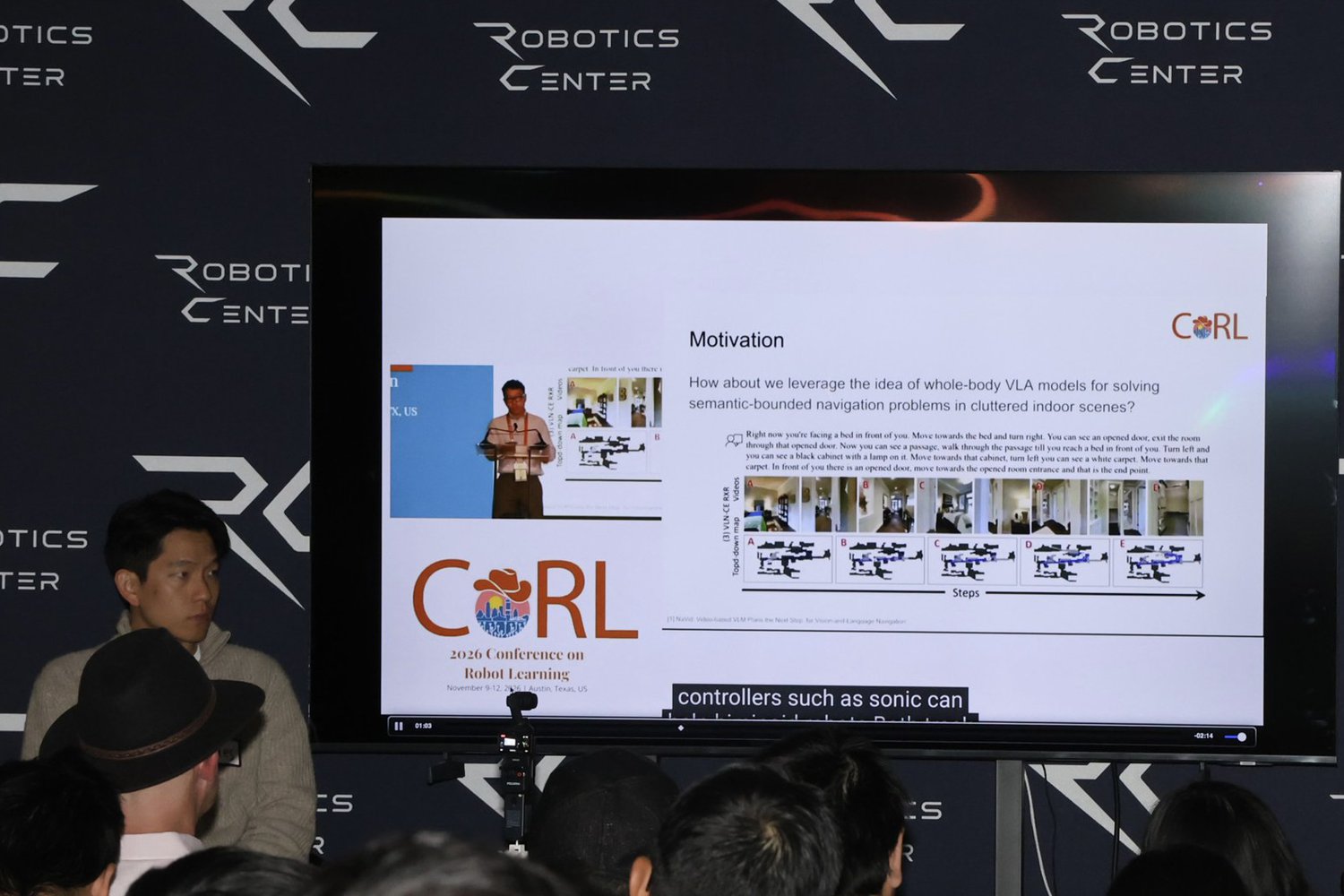
5. A whole-body humanoid model trained only in simulation
Yuxin Chen · UC Berkeley BAIR · co-author of TANGO, a CoRL 2026 spotlight paper · recorded
TANGO trains a single whole-body model for humanoid navigation entirely in simulation, with randomly placed obstacles and planned reference motions, and runs it zero-shot on a real robot.
6. Your moat is the customer, not the algorithm
Ziqi Pang · Member of Technical Staff, Amazon FAR (Frontier AI & Robotics)
Ziqi came to robotics from language and vision models. His advice to the room: "everyone should go into the customer place, should go find a factory." What protects a robotics company, in his view, is the team, the operating experience and the customer relationships built along the way. Any algorithm or specialized dataset won't be the barrier.
7. Take things out, not only add them
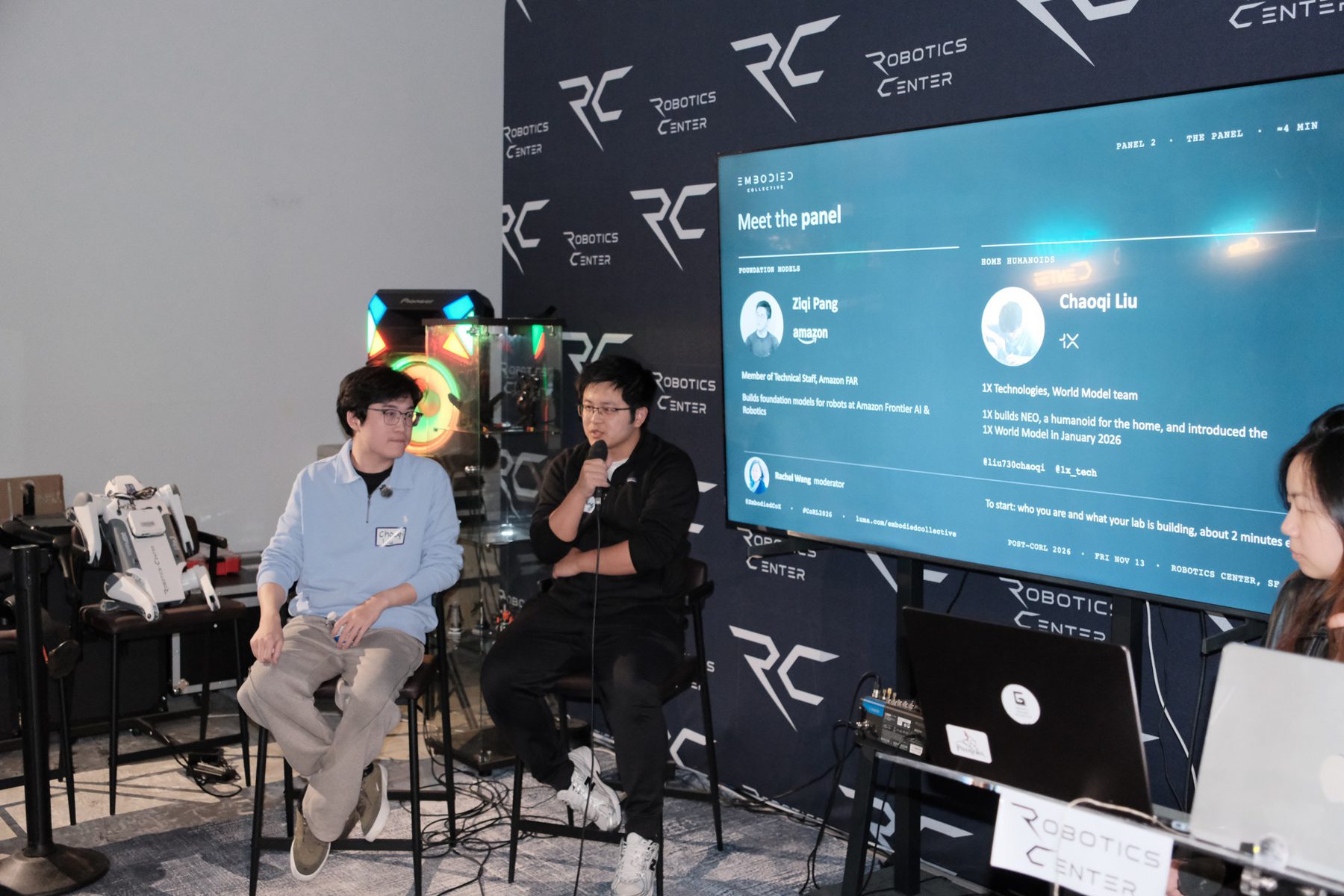
Chaoqi Liu · Student researcher, World Model team at 1X
Chaoqi wants more ablative research: take a component out and see whether it was ever needed. A paper that combines work A and work B into A plus B, he said, doesn't move the field much.
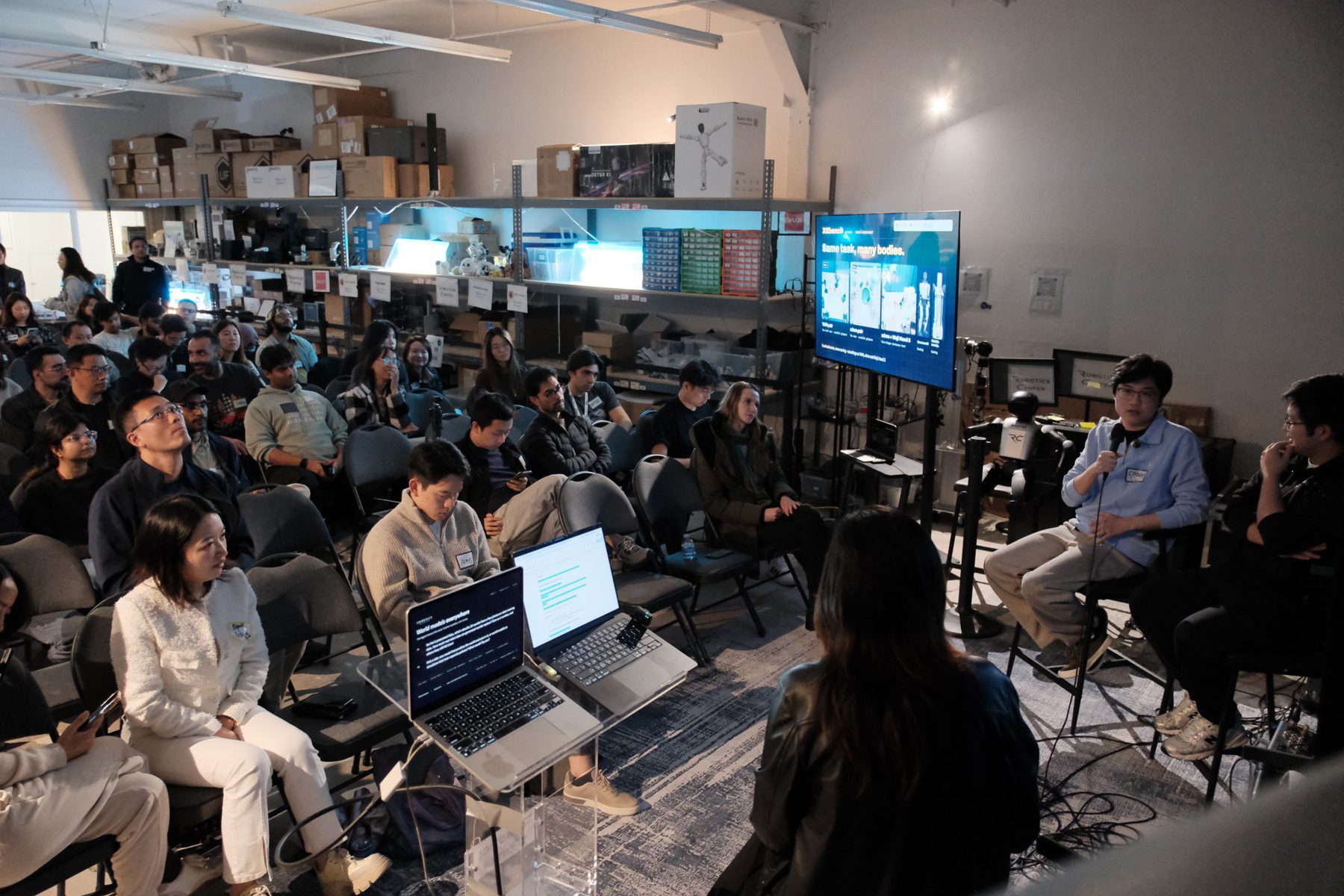
8. Hardware is still the bottleneck
Chaoqi Liu · Student researcher, World Model team at 1X · and Ziqi Pang · Amazon FAR
Chaoqi was blunt: "Hardware is really a problem." A tendon-driven humanoid like NEO is safe enough to work right next to, but hard to iterate on when you are testing policies. Ziqi saw the opening for builders: "There is still a very big room for building new hardware," shaped by how you want to serve your customer.
9. Control is coming back
Chaoqi Liu · 1X
For years the field moved away from control. With humanoids, Chaoqi said, people are seeing that "the policy is producing something really nice, but the robot just cannot track it." It was the same point Bangya made on the first panel.
10. From "the funeral of robot learning" to hope
Ziqi Pang · Member of Technical Staff, Amazon FAR
Ziqi said many people walked into CoRL 2026 expecting "the funeral of robot learning." After Russ Tedrake's keynote on learning in real factories, "a lot of people feel hope again." His read: robotics is returning to its essence, real robots doing useful work.
The best questions of the night
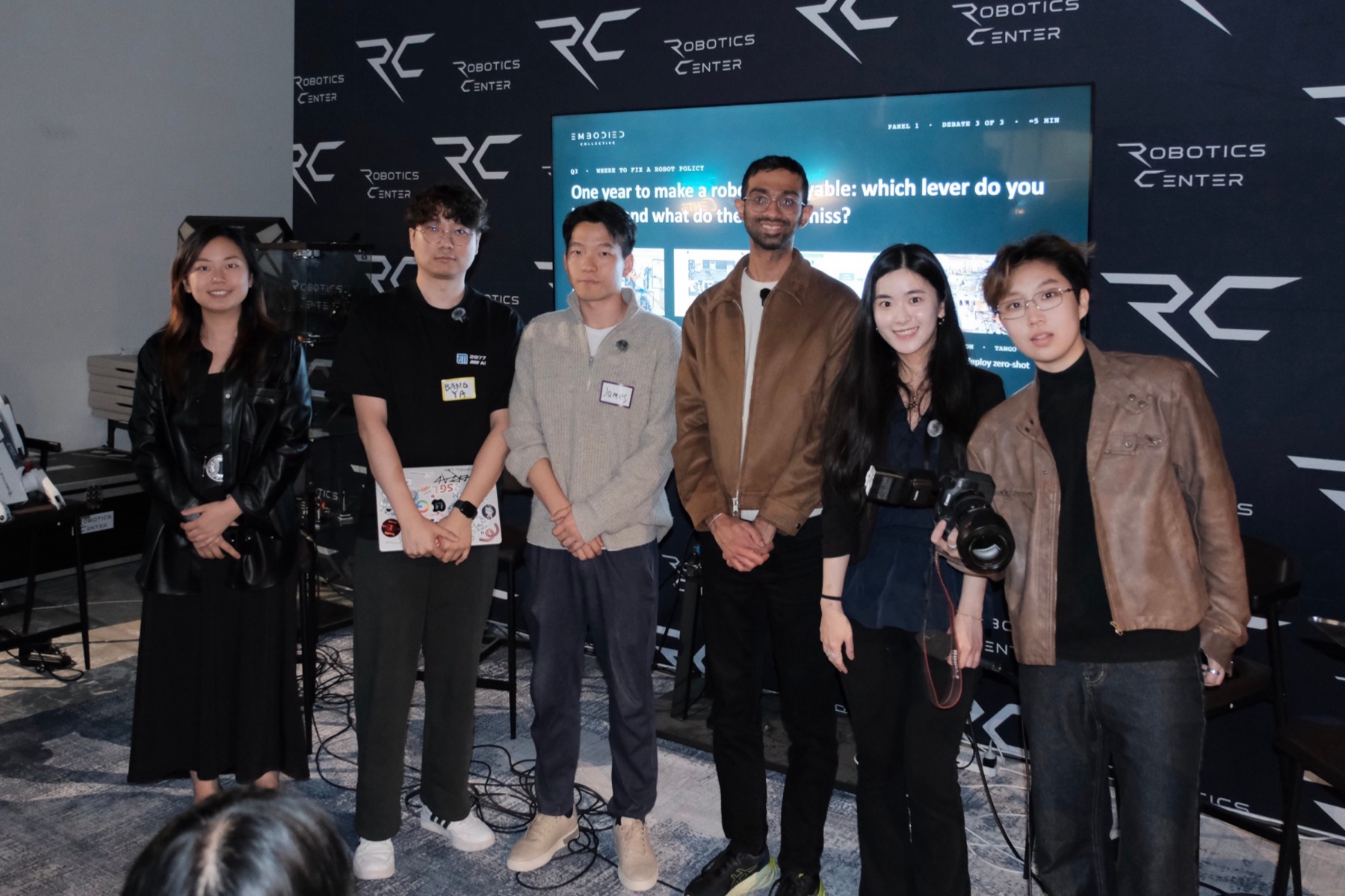
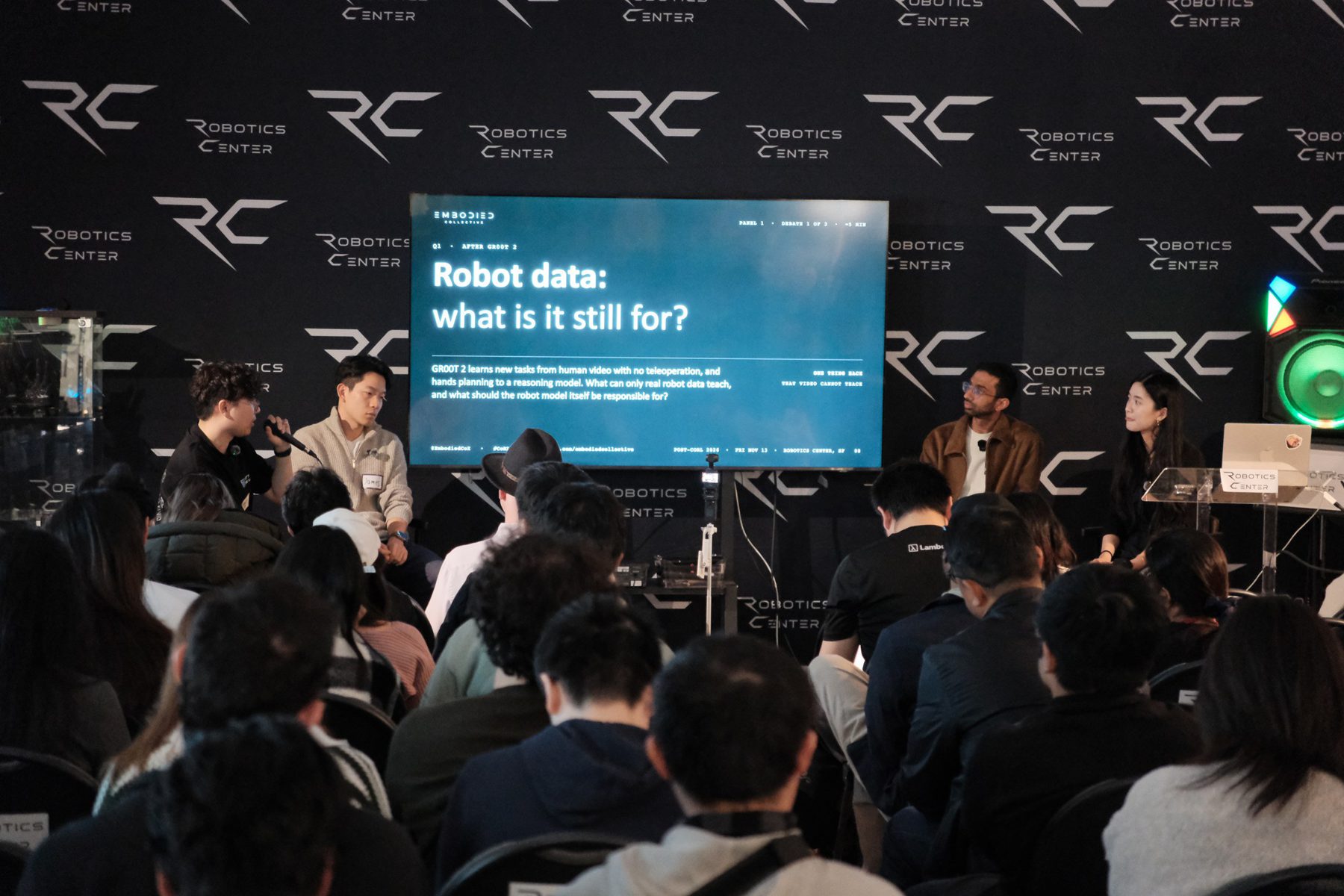
Sharon Zhang: "What can only robot data teach?"
- James: "For the last mile [..] you still need physical data from the physical world because video cannot tell you. How do you know what the temperature of the surface was?"
- Manthan: "With system two, we might not need that much robot data. But when we move to system one and system zero, we definitely need real robot data."
- Bangya: for the lower-level models, teleoperated data is still the best, "because it is coupled with the environment."
Sharon Zhang: "If you had one year to make a robot deployable, which lever would you bet on?"
- Manthan: "Real to sim to real," plus some real-world data for post-training "to close the sim to real gap."
- Bangya: "Another widely ignored dimension, the control layer."
Rachel Wang: "How much real data can generated worlds replace? Give me a number."
- Chaoqi: "I don't know." Rachel: "That's a very frank answer." He did add that 1X already uses neural simulators for evaluation and sees "a reasonable correlation" with real performance.
Rachel Wang: "Which results break down at a real customer, and which are ready?"
- Ziqi: the ideas that last have principles "really easy to give to an agent or another person so that he can reproduce," and they scale. His example from the night: James's exoskeleton, "a really good example of what kind of research idea can flourish in the real world."
Rachel Wang: "What research do you want from academia?"
- Ziqi: "Do something crazy [..] that's what PhD can do."
Next up · Friday, Nov 20
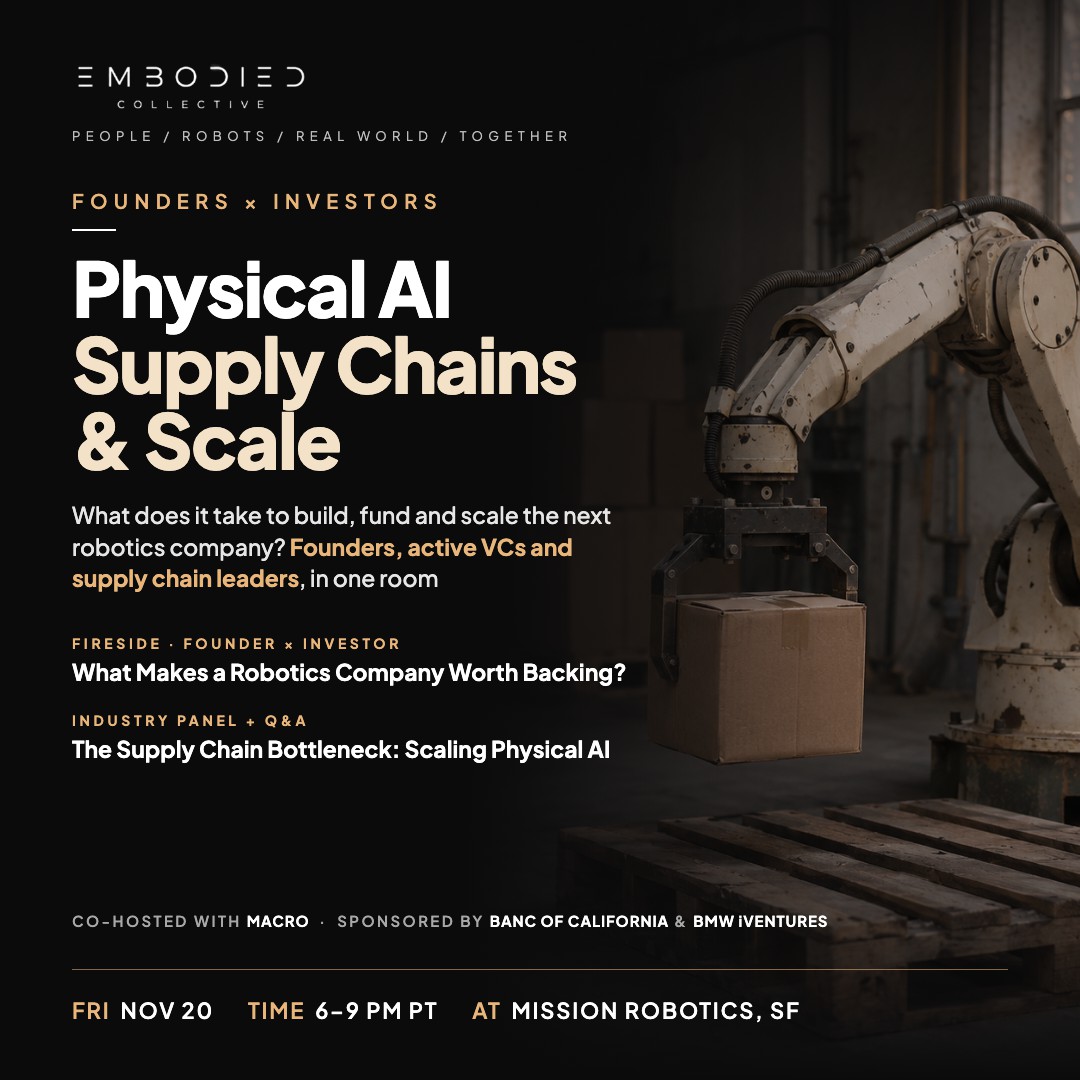 Physical AI Founders × Investors: Supply Chains & Scale
Fri, Nov 20 · 6:00–9:00 PM PT · Mission Robotics, 3001 19th St, San Francisco
Co-hosted with Macro, which is building an AI agent platform for robotics and hardware companies.
Robotics founders, investors and supply chain leaders in one room. A founder × investor fireside on what makes a robotics company worth backing, then an industry panel on the supply chain bottleneck in scaling Physical AI. Speakers and featured investors will be announced on the event page. Registration requires approval. Request to join Know a founder, investor or supply chain lead who should be there? Forward the invite
From the community
1,627 people have registered for our events, from 1,178 companies. 90% work in or around Physical AI, and 50% are founders, C-level, VPs, directors or partners.
Stay close to Embodied Collective
- Looking for a pilot site, an integrator, a supplier or an investor? Want to speak, co-host or sponsor? Tell us in this short form. We only introduce both sides after each says yes.
- Follow us on X for speaker announcements, live notes and the recap.
- Follow us on LinkedIn for speaker intros and takeaways.
Thank you
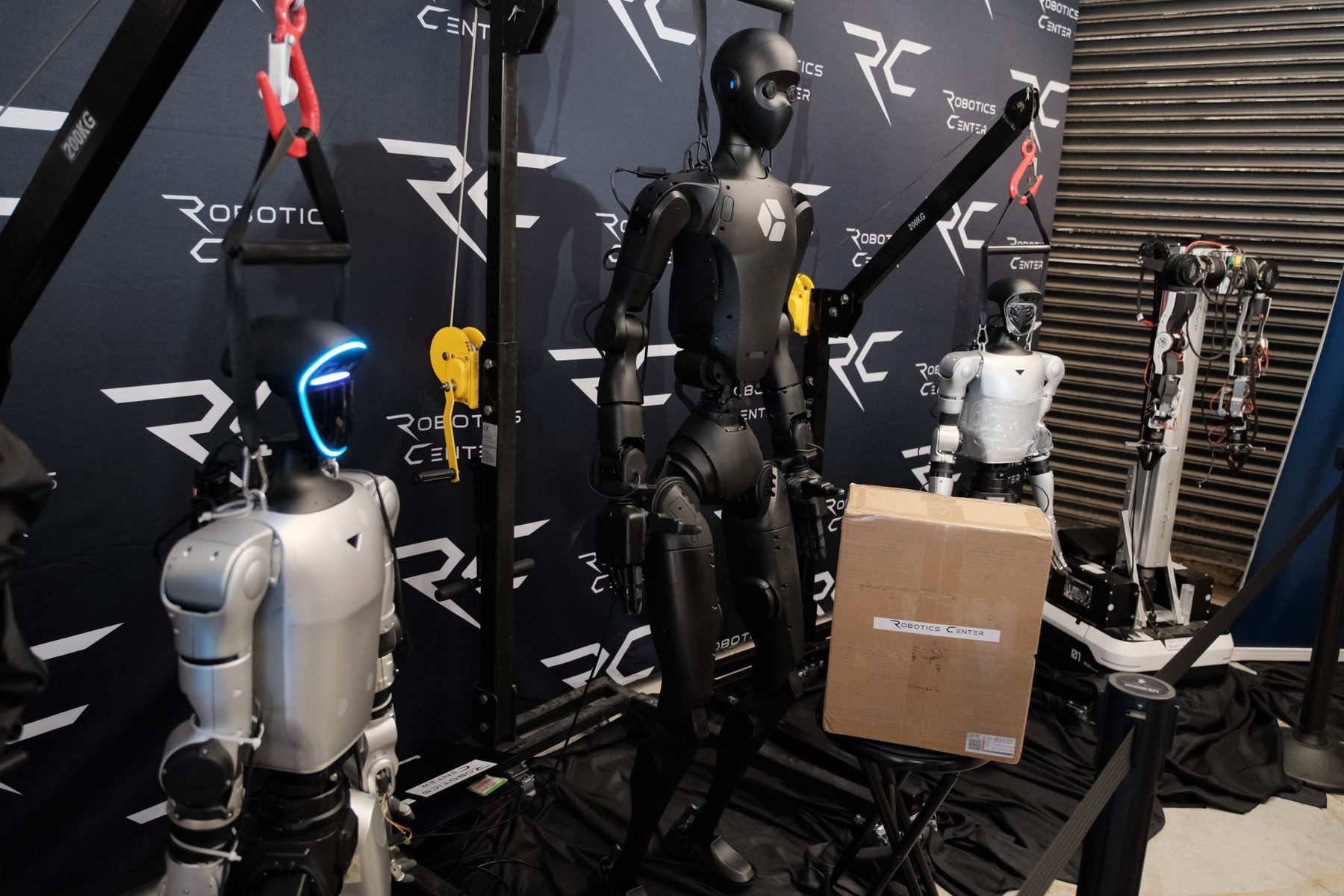
To our seven speakers, including the two who recorded their talks at the airport. To Sharon Zhang and Rachel Wang for moderating. To Ori, who joined Skylar on stage for the opening. And to ZeroShot for the Unitree H2 and G1 demos in the back of the garage, and to Jerry Huang and Robotics Center of Silicon Valley for hosting us.

See you on the 20th,
The Embodied Collective team
Founder, Embodied Collective