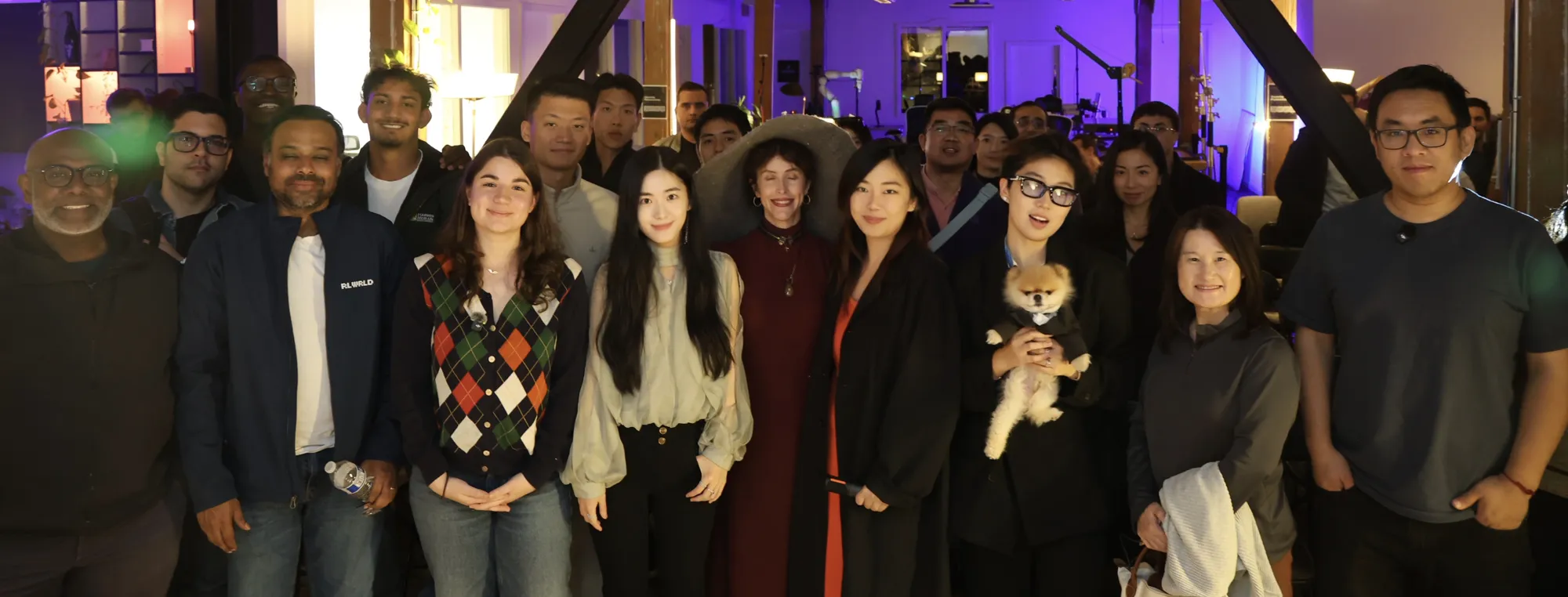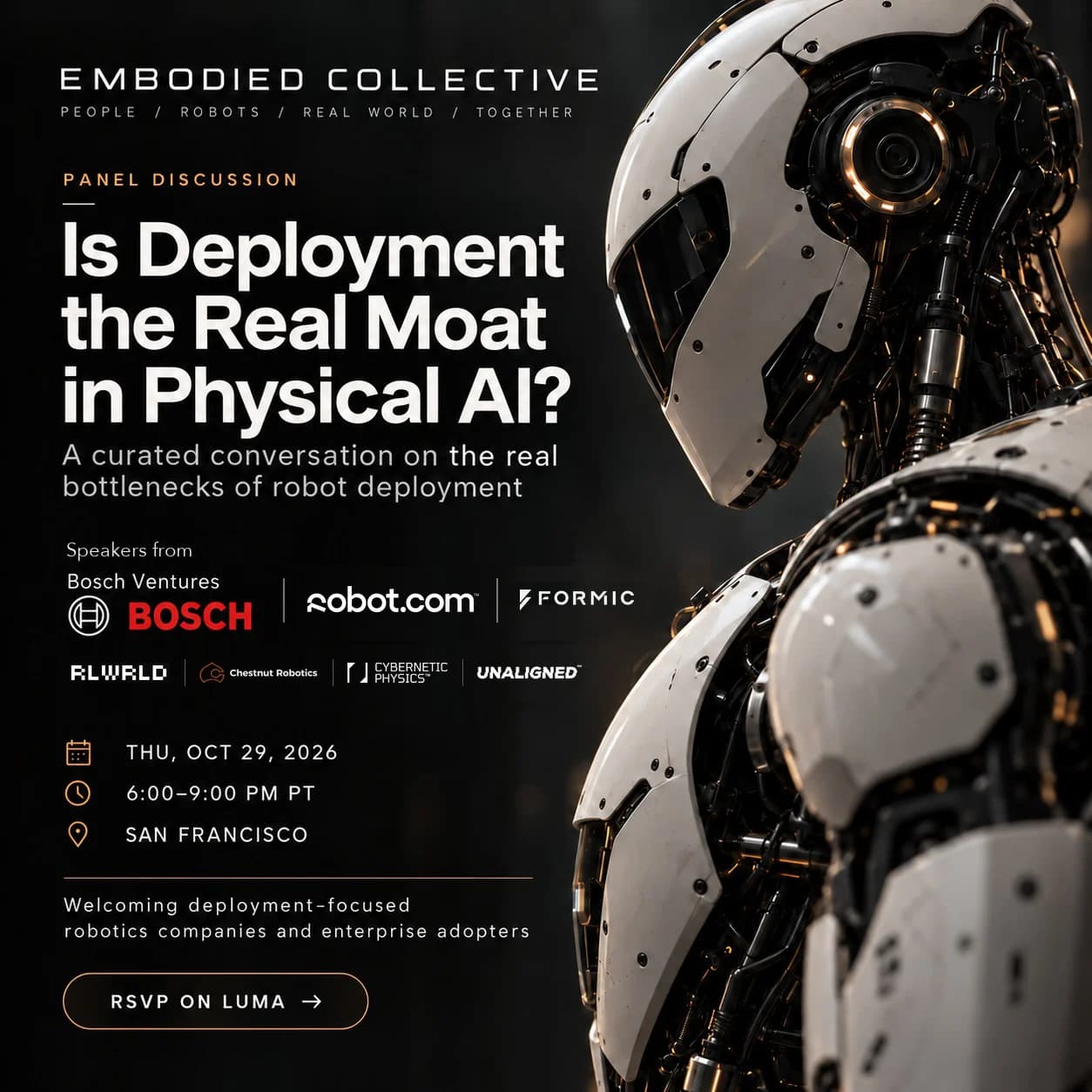
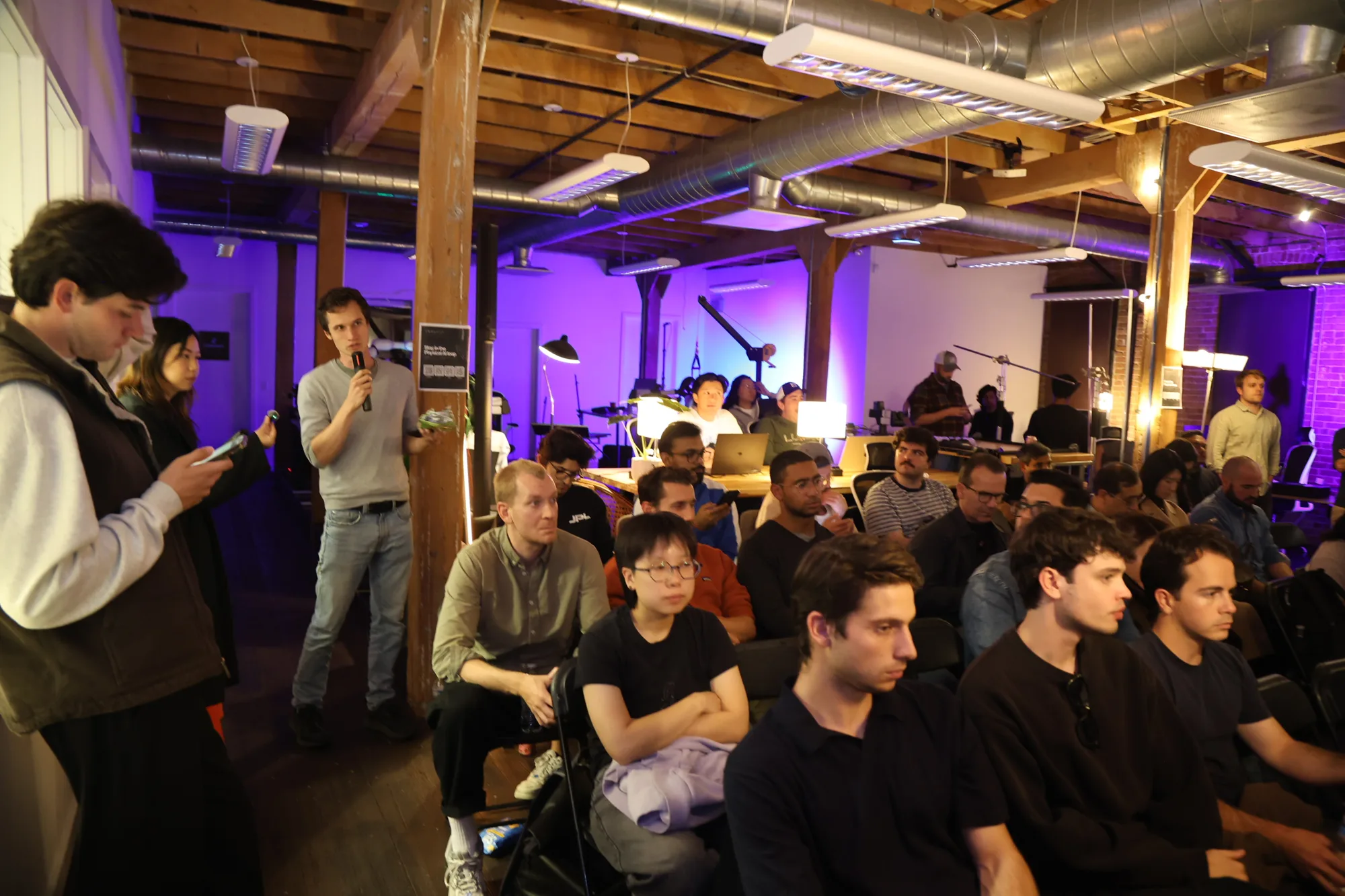
The Physical AI Brief goes out to Embodied Collective subscribers on Luma. This is No. 03, sent on November 6, 2026. Subscribe on Luma.
Last week the robotics market started paying for work, not demos. A humanoid company went public on the strength of contracted orders and run hours. Walmart committed about $6 billion to warehouse automation. a16z backed a startup that rents robots by the hour.
Two other stories are reminders of what's still unsolved: a new real-world benchmark where no robot AI model finished a single humanoid task, and a White House order that puts tariffs on imported robots on the table.
Just in
Agility Robotics is now a public company
Agility completed its merger with Churchill Capital Corp XI on Nov 4 and starts trading on Nasdaq as AGLT on Nov 5. The company expects about $465 million in gross capital, including a roughly $201 million PIPE led by Foxconn. It says Digit 5 has more than $300 million in committed multi-year orders and that Digit has logged over 65,000 hours of real-world work at customers including GXO, Schaeffler and Toyota Motor Manufacturing Canada.
Public investors are now being asked to value a humanoid company on contracted orders and hours worked, not on videos.
Source: Agility Robotics, Nov 4 · SEC filing, Oct 30
Last week in Physical AI
1. Walmart commits about $6B to Symbotic across 25 distribution centers
Walmart and Symbotic expanded their agreement on Oct 29 to bring Symbotic's automation to 25 U.S. regional distribution centers. The deal includes an initial commitment of about $6 billion in spend over several years.
This is what scale looks like: one anchor customer funding many sites over many years, instead of one pilot at a time.
Source: Symbotic SEC filing, Oct 29
2. Tutor Intelligence raises $75M to rent robots by the hour
Tutor Intelligence raised a $75 million Series B led by a16z. It rents two warehouse robots by the hour: Cassie for case picking and palletizing, and Sonny for e-commerce fulfillment. According to a16z, setups take as little as 8 hours, nearly a third of recent customers came back for more robots, and the goal is more than 1,000 robots under contract by the end of 2027.
Hourly pricing means the customer has no upfront cost and the vendor gets paid only while the robot works.
Source: a16z, Nov 2 · Tutor Intelligence
3. A new benchmark tests robot AI models on real robots, and humanoids score zero
RoboColosseum, a real-world benchmark from researchers including Hugging Face's Thomas Wolf, runs robot AI models on real robots and publishes every run, failures included. In the paper, the team ran 5,699 head-to-head comparisons across 124 sites. On the Unitree G1 humanoid, none of the policies tested completed any of the five tasks, and average progress was between 13% and 23%. Teams can apply for free evaluation time.
Open, real-world numbers make it harder to sell a demo as a product, and smaller teams can test without buying hardware.
Source: RoboColosseum paper, Nov 2 · robocolosseum.ai
4. The U.S. finds that robot imports threaten national security
A presidential proclamation under Section 232, signed Oct 28 and published in the Federal Register on Nov 2, says imports of robotics, industrial machinery and their parts threaten to impair national security. It does not set a tariff yet. Commerce and USTR are told to negotiate with trading partners and report back within 180 days. Separately, on Oct 30 the FCC cleared robots from six companies, including OMRON and ATI Motors, from its ban on foreign-made robots, each tied to an onshoring plan.
If your U.S. deployment relies on imported hardware, start pricing in tariff risk now. The clock is about six months.
Source: The White House, Oct 28 · FCC public notice, Oct 30
Also last week
Three stories from Oct 26 to 28 that landed between our issues.
Bedrock Robotics raises $600M at a $4.1B valuation
Bedrock, which retrofits existing excavators to run autonomously, raised a $600 million Series C co-led by CapitalG and Emergence Capital, at a $4.1 billion post-money valuation.
Source: Bedrock Robotics press release, Oct 26 · Goodwin
Google DeepMind releases Genie 4, a world model that can simulate robots
Genie 4 generates interactive worlds in real time, now with sound. DeepMind lists robot training environments as a use and showed it with Gemini simulating Apptronik's Apollo humanoid playing checkers. It's a research preview for trusted testers for now.
Source: Google DeepMind, Oct 27
Aurora: 500,000 driverless miles, but the truck ramp is six weeks late
Aurora's Q3 letter says its trucks passed 500,000 commercial driverless miles with 100% on-time delivery. It expects more than 200 driverless trucks by the end of February and more than 1,000 by the end of 2027, but production is about six weeks behind plan.
Source: Aurora Q3 shareholder letter, Oct 28
Next up
After Austin: what CoRL 2026 says about the next year of robot learning
CoRL 2026 is in Austin from Nov 9 to 12. Right after, we're bringing the researchers back to San Francisco to unpack what it means for robots that have to work in the real world. Follow us on Luma, LinkedIn and X for the date.
One ask
Building, deploying or buying robots and looking for someone specific: a pilot site, an integrator, a supplier, an investor? Tell us who you want to meet in this short form, or email partners@embodiedcollective.org. We introduce both sides only after each says yes.